
The 5 Best HVAC Marketing Agencies in 2026
Most HVAC contractors are paying per lead on Angi or locked into a Scorpion contract they can't exit. Here's a shortlist of agencies that actually build search visibility you own.
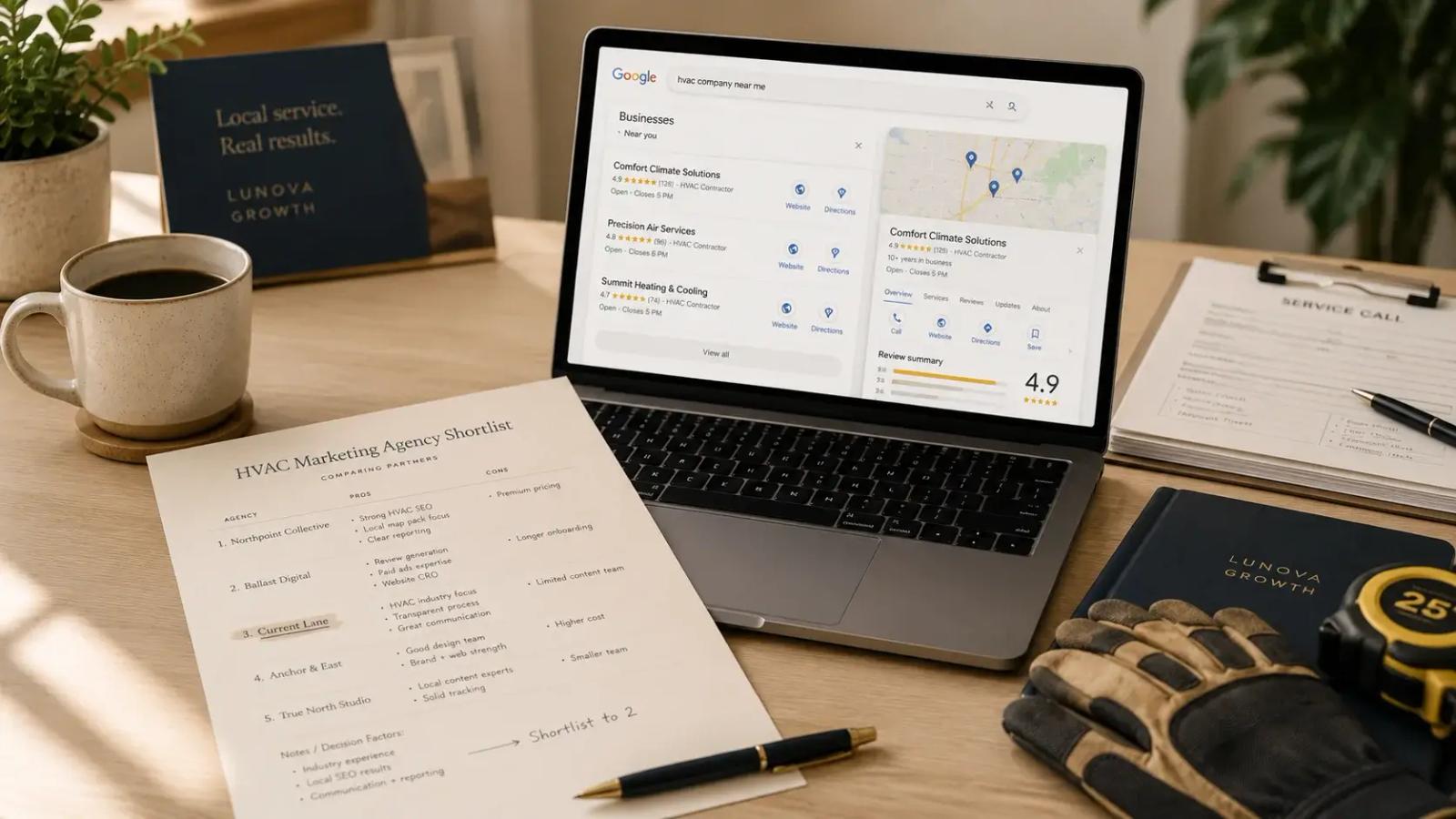
Most HVAC contractors already know the lead aggregator problem. You pay Angi or HomeAdvisor for a lead, that same lead gets sold to four other contractors, and you're competing on price before the homeowner has ever heard your name. The calls you do get are from buyers who are shopping, not buyers who trust you.
The alternative is search visibility you own. A company that ranks in the Google map pack for "HVAC repair near me" or "AC installation in [city]" gets that call without paying per lead, and the caller found them first. That's a different conversation entirely.
Getting there requires either the time to build it yourself or an HVAC marketing agency that knows how the trades work. This list covers both the enterprise platforms built for multi-location operators and the boutique options built for growth-stage contractors who don't need a $10,000 monthly retainer to get started.
How We Evaluated These HVAC Marketing Agencies
Every agency on this list was assessed against five criteria specific to how HVAC businesses actually get customers. A general marketing agency that also "serves contractors" won't score well here.
Criterion 1: Trades-specific local SEO. HVAC queries are almost entirely local intent. "Furnace repair near me," "HVAC installation in [city]," and "emergency AC repair" are all map pack searches first, organic results second.
This criterion checks whether the agency treats Google Business Profile (GBP) management, local citation building, and location-page strategy as primary services rather than add-ons.
Criterion 2: Seasonal demand management. HVAC businesses live by the calendar. A marketing agency that runs the same campaigns in January as in July doesn't understand the trades. This criterion looks at whether the agency has documented methodology for surge-season scaling and off-season lead building.
Criterion 3: Reporting tied to booked jobs. Impressions and click-through rates don't pay technician wages. This criterion evaluates whether the agency reports on calls, booked appointments, and cost per acquired job, not just campaign-level metrics.
Criterion 4: Channel coverage relevant to HVAC. The trades marketing mix is specific: GBP, local SEO, Google Local Services Ads (LSAs), pay-per-click, and review management are the primary channels. Social media and email play a secondary role. This criterion checks whether the agency is strong in the channels that actually drive HVAC revenue.
Criterion 5: Contract and ownership terms. Several enterprise HVAC marketing agencies use proprietary CMS platforms that the client doesn't own. Leaving means starting over. This criterion flags whether the agency's contract structure protects the client or the agency.
The five agencies below are listed from largest to most specialized. Read each entry against the criteria that matter most for your business.
The 5 Best HVAC Marketing Companies in 2026
The list below ranges from enterprise platforms serving thousands of HVAC companies to boutique digital marketing agencies built around the service-business model, including Lunova. Each HVAC marketing company has a genuine case for inclusion.
1. Scorpion
Scorpion is one of the largest marketing platforms serving HVAC and home services businesses in the US, with over 20,000 clients across trades, legal, and healthcare.
Their HVAC offering is built around an all-in-one platform that combines website, SEO, paid search, and AI-powered intake tools under one contract.
- Trades-specific local SEO. Scorpion's HVAC product includes GBP management, local SEO, and LSA management as core features. Their proprietary platform tracks client journeys and integrates with industry CRMs including ServiceTitan, which is relevant for larger operations already on that stack.
- Seasonal demand management. Scorpion's capacity marketing tools shift campaign spend based on schedule availability, which addresses one of the most common HVAC marketing problems: running full campaigns when the team is already booked out, and going dark when they need leads most.
- Reporting. Their RevenueMAX product connects marketing spend to booked jobs and attributed revenue. For operators who want to see a direct line from ad spend to invoice, this is one of the more developed attribution systems in the trades category.
- Channel coverage. Website, SEO, paid search, LSAs, social, and AI-powered chat and call handling are all included. The platform is intentionally all-in-one rather than modular.
- Contract and ownership. This is Scorpion's most significant limitation. Their websites are built on a proprietary CMS the client does not own. Leaving Scorpion means rebuilding the site from scratch. Multiple verified client reviews confirm this is a real cost: reported at $20,000 to $30,000 to rebuild after exit. Contracts are typically 12 months.
- Pricing. Scorpion retainers for HVAC businesses run approximately $3,000 to $10,000 per month depending on market size and service scope, based on multiple third-party pricing analyses published in 2026. Ad spend is billed separately.
Best fit: Multi-location HVAC operators, franchise groups, and PE-backed platforms that need enterprise-level infrastructure and can commit to long-term contracts. Not the right fit for single-location contractors who want to own their marketing assets.
2. Blue Corona / RYNO Strategic Solutions
Blue Corona and RYNO Strategic Solutions operate under the same parent company and together form one of the more specialized HVAC and home services marketing operations in the US. RYNO focuses exclusively on home services trades, while Blue Corona serves a slightly broader base.
- Trades-specific local SEO. RYNO's entire model is built around home services, which means their local SEO methodology is trades-specific rather than adapted from a general agency playbook. Location pages, GBP management, and local citation work are core to their offering.
- Seasonal demand management. Home services seasonality is built into RYNO's campaign management approach. Their public content on HVAC marketing covers peak-season bidding strategy and off-season lead generation, reflecting genuine vertical depth.
- Reporting. Reporting is oriented toward booked jobs and cost per lead rather than impression-level metrics. The trades focus means the reporting framework is built around outcomes that matter to an HVAC business owner.
- Channel coverage. SEO, PPC, LSAs, social, and website development are all covered. The home services focus means the channel mix is calibrated for trades rather than borrowed from a retail or B2B marketing playbook.
- Contract and ownership. Blue Corona and RYNO do not use proprietary CMS platforms in the same way Scorpion does. Confirm website ownership terms directly before signing.
- Pricing. Mid-market HVAC operations should expect retainers in the range of $5,000 to $15,000 per month based on publicly available 2026 industry pricing analyses. Enterprise multi-location accounts run higher. Ad spend is separate.
Best fit: Established single-location and multi-location HVAC companies that want a trades-specialist agency with strong home services vertical depth and are ready to invest at a mid-to-upper market retainer level.
3. Lunova
Lunova Growth Marketing Agency is the non-aggregator, non-enterprise option on this list. Where Scorpion and Blue Corona are built for operators that need platform infrastructure and multi-location management, Lunova is built around the growth-stage HVAC contractor.
The goal: stop paying per lead and start owning search visibility, without a five-figure monthly retainer or a contract that locks them out of their own website.
- Trades-specific local SEO. Local SEO and GBP management are the starting point for every HVAC engagement at Lunova. The map pack is where most HVAC jobs are won, and Lunova treats GBP optimization, local citation building, and service-area page structure as first-priority work rather than features in a broader platform.
- Seasonal demand management. The Lunova model is built around the HVAC calendar. Campaign spend, content production, and paid search bidding are adjusted seasonally as a standard part of retainer management, not a premium add-on.
- Reporting. Reporting connects marketing activity to calls, booked appointments, and cost per acquired job. The goal is the same metric the HVAC owner cares about: a full schedule, not a healthy impression share.
- Channel coverage. SEO, paid search, LSAs, GBP management, content, and social under a single retainer. One point of contact who knows the business and the vertical, rather than a specialist team managing one channel at a time.
- Contract and ownership. Lunova does not use proprietary CMS platforms. The client owns their website and marketing assets. Month-to-month retainer options are available. Lunova's model is built on results that make clients want to stay, not contracts that make leaving expensive.
- Pricing. Lunova's packages are structured around business situation rather than tier name. Options range from businesses just getting started with real marketing through to a full marketing function for established operators. See the Growth Audit for a scoped recommendation based on your specific situation.
Best fit: Growth-stage HVAC contractors ready to build search visibility they own, who want full-channel coverage under a single retainer without an enterprise price tag or a proprietary platform they can't exit. Operators looking for a platform with deep enterprise infrastructure and AI-powered intake tools should look at Scorpion or Blue Corona instead.
4. Thrive Internet Marketing Agency
Thrive is a full-service digital marketing agency with documented work across home services, HVAC, and trades businesses. Their public positioning covers plumbing, HVAC, and electrical contractors alongside medical, legal, and franchise operations, which gives them genuine multi-vertical experience relevant to service businesses.
- Trades-specific local SEO. Local SEO is a core service at Thrive, with published methodology covering GBP management, local citation building, and map pack optimization. Their trades-specific content reflects familiarity with the HVAC buyer journey rather than adapted general-market SEO practice.
- Seasonal demand management. Thrive's published work on home services marketing covers seasonal campaign management. Their methodology accounts for peak-season competition and off-season lead nurturing as distinct strategic phases.
- Reporting. Monthly reporting covers lead volume, call tracking, and campaign attribution. The depth of booked-job-level reporting depends on account structure and service tier.
- Channel coverage. SEO, PPC, social media, web design, email, and video are all offered in-house. The full-channel model suits HVAC businesses that need multiple channels managed rather than a single-channel specialist.
- Contract and ownership. Thrive does not use a proprietary CMS. Website ownership terms are standard; confirm directly before signing.
- Pricing. Thrive does not publish standard pricing. Retainers are quoted by scope. Request a quote directly; expect mid-market pricing for full-service engagements.
Best fit: HVAC businesses that want a full-service agency with documented trades experience and need multiple channels covered, at a budget level that doesn't require enterprise infrastructure.
5. Hook Agency
Hook Agency focuses on trades and home services contractors, with HVAC, plumbing, and roofing as their primary verticals. Their model combines website design with SEO and paid search, with particular emphasis on brand-forward websites that convert traffic into calls rather than generic contractor templates.
- Trades-specific local SEO. SEO for home services contractors is Hook's stated focus, with specific methodology published around keyword strategy, location pages, and GBP optimization for trades businesses. Their public content is trades-specific rather than adapted from a general agency playbook.
- Seasonal demand management. Hook's home services focus means seasonal campaign management is part of their standard approach. Their published content on HVAC marketing covers shoulder-season strategy and emergency-service PPC specifically.
- Reporting. Reporting covers leads, calls, and organic ranking movement. Hook's public positioning emphasizes brand differentiation alongside lead volume, which suits HVAC companies that want to stand out rather than just generate undifferentiated calls.
- Channel coverage. Website design, SEO, and paid search are the core services. Hook is stronger in design-led brand positioning than in full-channel management. HVAC businesses that also need social media, email, or LSA management may need supplementary coverage.
- Contract and ownership. Hook Agency requires annual commitments at their full-service tier. Website ownership is standard. Confirm contract terms before signing, particularly if flexibility is a priority.
- Pricing. Hook Agency starts at approximately $3,500 per month for full-service engagements, based on publicly available 2026 pricing data. Annual contracts apply at this level.
Best fit: Established HVAC contractors with a clear local market and an existing customer base who want brand-differentiated digital marketing rather than a generic contractor template. Not the right fit for early-stage businesses or those needing full-channel coverage beyond SEO and paid search.
Questions to Ask Before Signing With an HVAC Marketing Agency
The criteria above give you the evaluation framework. These questions give you a way to verify the answers in a real discovery call.
Who owns my website if I leave? This is the single most important contract question in the HVAC marketing space. Several enterprise agencies build sites on proprietary platforms the client does not own. Get this answer in writing before signing anything.
Do you manage Google Local Services Ads, and is that included in the retainer? LSAs are one of the highest-converting channels for HVAC businesses and are distinct from standard Google Ads. Confirm whether LSA setup and management is included or billed separately.
How do you adjust campaigns between peak and off-season? An agency without a documented answer to this question has not thought through the HVAC calendar. Push for specifics on what changes between summer, shoulder months, and winter.
What metrics are in the monthly report, and which one do you consider the primary success metric? If the answer is impressions, rankings, or traffic, keep looking. The primary metric for an HVAC marketing agency should be calls and booked jobs.
What is the contract length, and what happens if results are not meeting expectations in month three? Legitimate agencies with confidence in their work can operate month-to-month or offer shorter initial commitments. Long contracts protect the agency, not the contractor.
The Agencies That Didn't Make This List
A few categories worth naming because they show up constantly in HVAC contractor searches.
Lead aggregators presenting as marketing agencies. Angi, HomeAdvisor, Thumbtack, and similar platforms are lead marketplaces, not marketing agencies. The distinction matters: a lead aggregator sells you access to buyers; a marketing agency builds visibility you own. This list covers only agencies that build owned visibility.
Pay-to-play "best agency" directories. Several HVAC marketing lists are paid placements. Agencies pay for the ranking. This list has no paid inclusions.
General digital marketing agencies with a contractor landing page. An agency that serves HVAC contractors, restaurant groups, e-commerce brands, and SaaS companies with equal confidence does not have trades depth. Check how many active HVAC clients they're running before treating a landing page as evidence of vertical expertise.
Building Search Visibility You Actually Own
The HVAC contractors who generate the most consistent leads from digital marketing share one thing: they stopped renting visibility and started owning it.
Paying per lead on an aggregator is renting. Running Google Ads without building organic presence underneath is renting. A well-optimized GBP, a site structured around local search intent, and a steady flow of reviews create visibility that compounds over time rather than resetting to zero when the budget stops.
The agencies on this list understand that distinction. The right one for your business depends on where you are now and how fast you need to get to a full schedule.
If you want a clear picture of where your current search visibility stands before choosing a partner, Lunova's Growth Audit covers your GBP, local rankings, site structure, and content gaps with specific findings. Reach out to Lunova today and the audit will show you exactly what's in the way of a full schedule.
Get your free Growth Audit and see where your business stands.
Frequently Asked Questions
What does an HVAC marketing agency actually do?
An HVAC marketing agency builds and manages the digital channels that bring homeowners to your business. That includes Google Business Profile optimization, local SEO so your company appears in map pack results, paid search and Local Services Ads for immediate lead flow, and website content structured around the queries homeowners use when they need HVAC service.
The best HVAC marketing agencies also manage the review strategy that builds trust before the first call, handle seasonal campaign adjustments, and report on calls and booked jobs rather than impressions and clicks.
How much do HVAC marketing agencies charge?
HVAC marketing agency pricing in 2026 ranges from roughly $1,500 to $15,000 per month depending on the agency's size, the scope of services, and your market's competitiveness. Enterprise platforms like Scorpion run $3,000 to $10,000 per month. Specialist trades agencies like Blue Corona run $5,000 to $15,000 per month for mid-market accounts. Hook Agency starts at approximately $3,500 per month.
Ad spend is separate from agency fees at every agency on this list. Budget for both when comparing options.
Is SEO worth it for HVAC companies?
SEO is worth it for HVAC companies because most HVAC jobs start with a local search. "HVAC repair near me," "furnace replacement in [city]," and "emergency AC service" are all queries with high commercial intent that go to the company that shows up first in the map pack or organic results.
Local SEO for HVAC businesses has a compounding return that paid search doesn't: organic and map pack visibility built this year generates leads next year without an additional spend. Paid search stops the moment the budget stops.
How long does HVAC digital marketing take to produce results?
HVAC digital marketing timelines vary by channel. Google Local Services Ads can produce calls within the first week of a properly configured campaign. GBP optimization and local citation improvements typically show movement in map pack rankings within four to eight weeks.
Organic SEO builds over a longer timeline: three to six months before meaningful ranking movement on competitive terms, with compounding returns over the following 12 to 18 months. The fastest path to a full schedule is usually LSAs and GBP optimization first, with organic SEO building underneath.
Should an HVAC company use a trades-specific agency or a general marketing agency?
An HVAC company should almost always use a trades-specific agency or one with documented home services experience. The seasonal demand patterns, the dominance of local intent in HVAC searches, the importance of LSAs and GBP, and the review-driven trust model are all specific to the trades.
A general marketing agency adapting its retail or SaaS playbook to an HVAC business will miss all of those nuances. Ask any agency you're considering how many active HVAC clients they're running and what the seasonal campaign adjustment looks like. The answers tell you more than the pitch deck.