
SaaS Demand Generation: Build a Pipeline That Doesn't Need You
Most B2B SaaS companies confuse demand gen with lead gen and spend a year generating contacts no sales team wants to call. Here's what demand generation actually means, and how to build one that compounds.
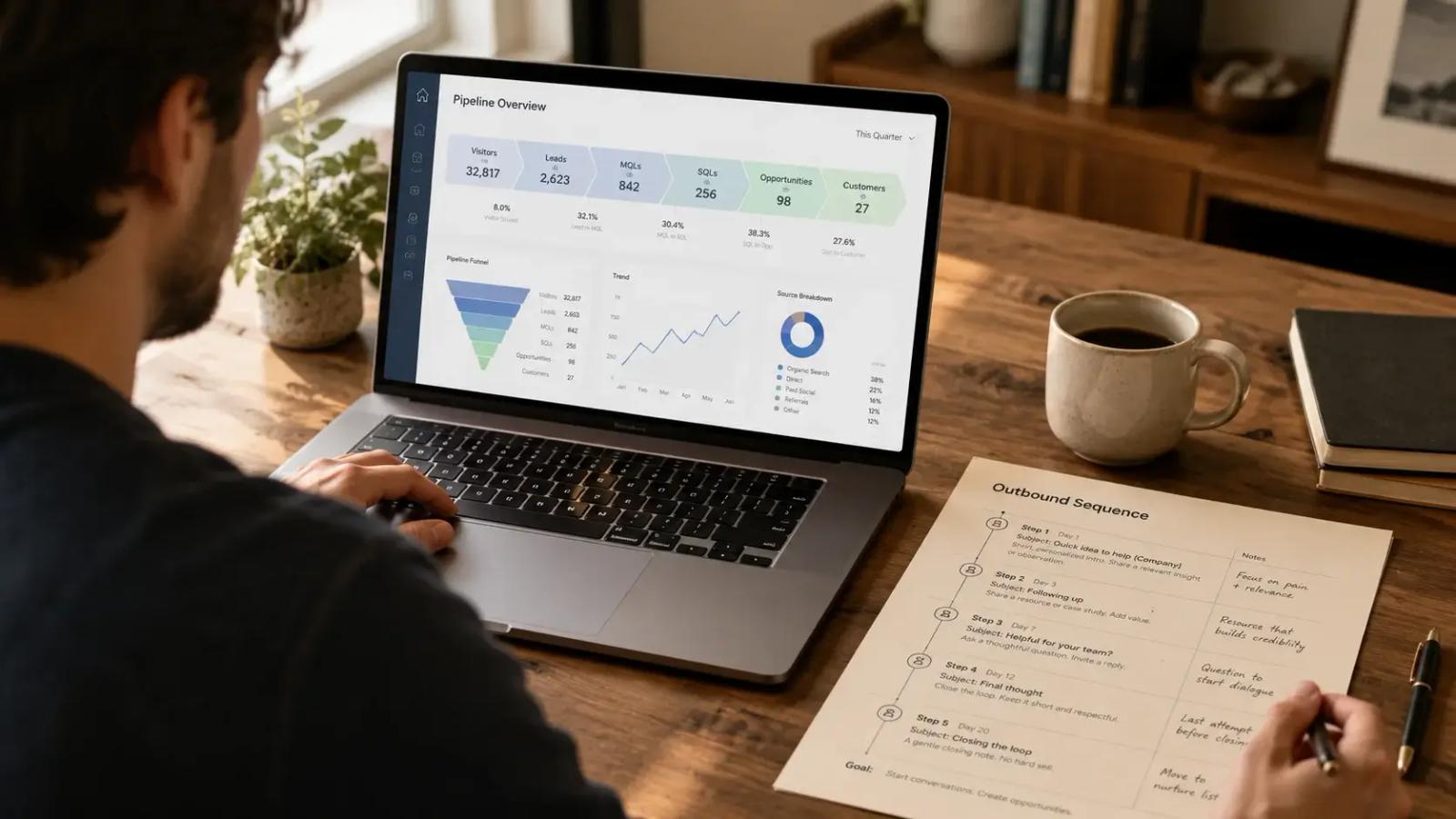
At some point in the life of most B2B SaaS companies, the founder looks at the pipeline and realizes every deal in it came from someone they already knew. SaaS demand generation is the fix for that dependency. Most teams don't build it until they're already feeling the absence of it.
That works until it stops working. And when it stops, it stops fast.
Building a SaaS demand generation system is how you replace that dependency. Done right, it fills your pipeline with qualified buyers who found you on their own, without anyone making a personal introduction. Done wrong, it generates a spreadsheet full of contacts your sales team doesn't want to call.
The difference between those two outcomes is mostly about how you define demand gen in the first place.
Demand Generation vs. Lead Generation: Not the Same Thing
Most early-stage teams use these terms interchangeably. That's where the confusion starts, and it's expensive confusion.
Lead generation is about collecting contact information. You run a paid campaign, someone downloads a white paper, you get an email address. Volume is the metric. The problem is that most people who download a white paper aren't in the market for your product right now. They were just interested enough to click.
SaaS demand generation is about creating and capturing intent that already exists, or building intent where it doesn't yet. The buyer raises their hand because they've already concluded they have a problem and are actively looking for solutions, not because an ad interrupted them at the right moment.
The practical difference: lead gen fills your CRM. SaaS demand generation fills your pipeline. Those are not the same list.
Why Founder-Led Sales Feels Like It's Working (Until It Isn't)
Founder-led sales is efficient in one very specific way: the founder understands the product better than anyone, can handle any objection, and carries enough credibility to close deals others couldn't. It's also a single point of failure.
Every deal depends on the founder's time, network, and willingness to be in the room. The moment they want to hire a sales team, take a vacation, or focus on product, the pipeline gets quiet. There's no system underneath it.
This is the moment most B2B SaaS companies start thinking seriously about SaaS demand generation. The problem is that by the time the pain is obvious, they've already lost several quarters they could have spent building the infrastructure.
SaaS demand generation takes time to compound. Organic content takes months to rank. Paid channels need several weeks of data before the algorithms find a rhythm. Email sequences need enough volume to test. The founders who transition most smoothly away from founder-led sales are the ones who started building their demand gen engine before they needed it.
The Four Pillars of SaaS Demand Generation
There's no single channel that does all of this. Effective SaaS demand generation runs several motions in parallel, each doing a different job in the buyer's journey.
1. Content and Organic Search
B2B buyers research for weeks before they talk to a vendor. They search for answers to specific problems, compare solutions, and read reviews before they ever fill out a demo form.
An organic content strategy targets those searches. A well-built article that ranks for "best [category] software for [use case]" puts your product in front of buyers while they're actively evaluating, at a cost that doesn't reset every month the way paid does.
The compounding effect is real. A page earns a top-five ranking in month four and keeps generating traffic in month fourteen.
That same principle behind local SEO for service businesses applies here: organic traffic compounds in a way paid traffic can't. That's the core argument for content as a SaaS demand generation channel: the return curve bends upward over time rather than flattening.
2. Paid Acquisition
Organic takes time. Paid gives you buyers now, at a cost you control. For most early-stage SaaS companies, the right answer is both, not one or the other.
LinkedIn is where B2B intent concentrates for most SaaS verticals. You can target by job title, company size, industry, and seniority, reaching the actual decision-makers rather than a broad audience that happens to share some interests.
Google Ads catches buyers who are already searching for a solution by category name. Retargeting keeps you visible to site visitors who didn't convert on their first visit.
The channel mix depends on your ICP. An agency-focused SaaS product probably converts better on LinkedIn. A developer tool probably does better on Google and in niche communities. Run tests before committing budget to either at scale.
3. Email and Lifecycle Sequences
Most SaaS demand generation programs treat email as an afterthought: a newsletter sent to a cold list when the marketing calendar looks thin. That's a missed opportunity.
Email is where you convert warm interest into trial starts and trial starts into paying customers. A structured onboarding sequence that explains the product's highest-value features in the first two weeks dramatically improves trial-to-paid conversion.
A re-engagement sequence that fires when a trial user goes quiet can recover accounts that would otherwise churn before they pay. These aren't campaigns. They're infrastructure. Build them once, improve them over time, and they work continuously.
4. Community and Partnerships
For some SaaS products, the most efficient SaaS demand generation channel isn't paid or organic. It's the community where your buyers already spend time: a Slack community, an industry subreddit, a professional association, a podcast your ICP listens to every week.
This channel is slower to build than paid and harder to measure than organic, but the trust it produces is qualitatively different. A recommendation from a respected peer inside a trusted community converts at rates paid ads can't match. Map where your best customers spend time before writing off community entirely.
ICP Clarity Is the Prerequisite for Everything Else
Every demand gen channel works better when you know exactly who you're targeting. Every channel gets expensive fast when you don't.
Ideal customer profile (ICP) definition covers the specific combination of company size, industry, role, pain, and budget that describes your best buyers. It sounds like a strategy exercise that belongs in a slide deck. It's actually the most operational decision in your SaaS demand generation stack.
It determines which LinkedIn targeting parameters you use. It determines which keyword clusters your content targets. It determines which subject lines your email sequences open with. A fuzzy ICP produces fuzzy results at every stage of the funnel, and the fuzziness compounds as you move further down toward revenue.
If you haven't done a structured ICP exercise, start there. Interview your ten best customers. Ask them what problem they were trying to solve, how they found you, and what almost stopped them from buying. The patterns that emerge are more useful than any framework.
For a sense of how vertical-specific positioning changes everything, see how we approach full-funnel marketing for law firms: the buyer journey and ICP are equally specific, and the strategy shifts completely.
How to Track Demand Generation Without Lying to Yourself
The metrics that look good in a board deck (impressions, clicks, downloads, MQL count) are often the ones that tell you the least about whether SaaS demand generation is working.
Here's what actually matters at each stage:
- Top of funnel. Organic traffic to high-intent pages (not your homepage). LinkedIn ad click-through rate by audience segment. Email open rate on cold sequences.
- Mid-funnel. Trial starts by source. Demo requests by channel. Time from first touch to demo request.
- Bottom of funnel. Trial-to-paid conversion rate. Average sales cycle length by lead source. Revenue attributed by channel, not only pipeline.
The measurement setup matters as much as the strategy. If you can't trace a closed deal back to its original source, you're optimizing blind. Most early-stage SaaS companies have this gap, and it's fixable before it becomes a problem, but not after you've spent twelve months generating data you can't interpret.
When to Hire a SaaS Marketing Agency vs. Build In-House
This decision is mostly about speed and the stage you're at. In-house gives you domain knowledge, cultural fit, and the ability to compound institutional knowledge over time. An agency gives you a faster start, channel expertise you'd otherwise spend months building, and the ability to right-size the investment as you scale.
For early-stage companies that haven't hit product-market fit yet, neither is the right answer. The feedback from ten good customers is more valuable than a SaaS demand generation engine pointed in the wrong direction. Wait until you know who you're selling to and why they're buying before you invest in systematizing that motion.
For companies with paying customers who want to replace founder-led sales with something repeatable, a SaaS marketing agency can compress the timeline significantly. The scope and fit are confirmed after an audit, with full tier details on our packages page.
Figuring out which channels fit your ICP, building the content infrastructure, and wiring up attribution takes months from scratch. It takes less time when someone has already done it in adjacent contexts.
The most important thing to look for in an agency is channel-specific experience with B2B SaaS, not generalist marketing credentials. The playbook for a SaaS company is different enough from a local service business that vertical experience matters more than agency size or polish.
Build the Pipeline Before You Need It
SaaS demand generation done well produces something specific: a pipeline that's filling itself while you're focused on the product, the team, or the customer. Deals arrive that none of your network made happen. Buyers who found you through a blog post, a LinkedIn ad, or a peer recommendation.
That system takes six to twelve months to build from scratch, depending on how aggressively you invest and how clearly you've defined who you're trying to reach. The companies that transition most smoothly from founder-led sales are the ones who started earlier than they thought they needed to.
If you want to understand where your SaaS demand generation currently stands and where the gaps are, Lunova Growth Marketing Agency offers a free Growth Audit covering your current channels, organic presence, paid acquisition, and funnel attribution. Reach out and we'll give you a clear picture of where your pipeline is coming from, and where it isn't.
Get your free Growth Audit and see what's actually driving your pipeline.
Frequently Asked Questions
What is SaaS demand generation?
SaaS demand generation is the set of marketing activities that create and capture buyer intent, with the goal of building a repeatable pipeline. It typically includes organic content and SEO, paid acquisition, email lifecycle sequences, and community or partnership channels, run together rather than in isolation.
What's the difference between demand generation and lead generation?
The difference between demand generation and lead generation comes down to intent quality. Lead generation collects contact information at scale; the resulting list may include many people who are curious but not actively buying. SaaS demand generation creates or captures intent that already exists, targeting buyers who've concluded they have a problem and are actively evaluating solutions.
Demand gen fills the pipeline. Lead gen fills the CRM. Those aren't the same thing.
When should a B2B SaaS company invest in demand generation?
When a B2B SaaS company should invest in SaaS demand generation depends on where they are in the product cycle. The ideal time is after product-market fit: once you have paying customers, understand why they bought, and want to replace founder-led sales with something repeatable.
Building a demand gen engine before you know who you're targeting wastes the investment. Building it too late means relying on founder introductions longer than you needed to.
Which demand generation channels work best for B2B SaaS?
Which SaaS demand generation channels work best depends on your ICP, your sales cycle length, and your budget. LinkedIn Ads are effective for reaching specific job titles and company sizes. Google Ads catch buyers who are already searching by category. Organic content compounds over time and produces the lowest cost-per-acquisition at scale.
Email lifecycle sequences convert trial users into paying customers more reliably than any paid channel. Most companies that scale successfully run organic, paid, and email in parallel rather than betting on one channel.
How long does demand generation take to show results?
How long SaaS demand generation takes to show results varies by channel. Paid acquisition can produce qualified pipeline within a few weeks of launch, though it typically takes two to three months to calibrate against a specific ICP. Organic content and SEO take longer: most new pages take three to six months to rank for competitive terms.
Email sequences produce results on the timeline of your sales cycle. Most early-stage SaaS companies see meaningful pipeline improvement within four to six months of running all channels together.
Should we run demand generation in-house or hire an agency?
Running SaaS demand generation in-house builds institutional knowledge that compounds over time but takes longer to get going, especially if you're hiring for roles you haven't filled before. An agency gives you channel expertise faster and lets you right-size the investment as you grow, but requires finding one with genuine SaaS experience rather than a generalist background.
See our evaluating digital marketing agencies for what to look for before you commit.
How do you measure whether demand generation is working?
To measure whether SaaS demand generation is working, track different metrics at each funnel stage. At the top: organic traffic to high-intent pages, ad click-through rates by audience segment, and cold email response rates.
In the middle: trial starts by source and demo requests by channel. At the bottom: trial-to-paid conversion rate, average sales cycle length by lead source, and revenue attributed to each channel.
Impressions and MQL counts alone tell you very little about pipeline health. The measurement that matters most is whether your SaaS demand generation activity can be traced through to closed revenue.