
10 Yoga Studio Marketing Strategies That Fill Classes
Class attendance runs on teacher loyalty and community identity, not Instagram follower counts. Here are ten yoga studio marketing strategies built around how students actually find, choose, and stay with a studio.
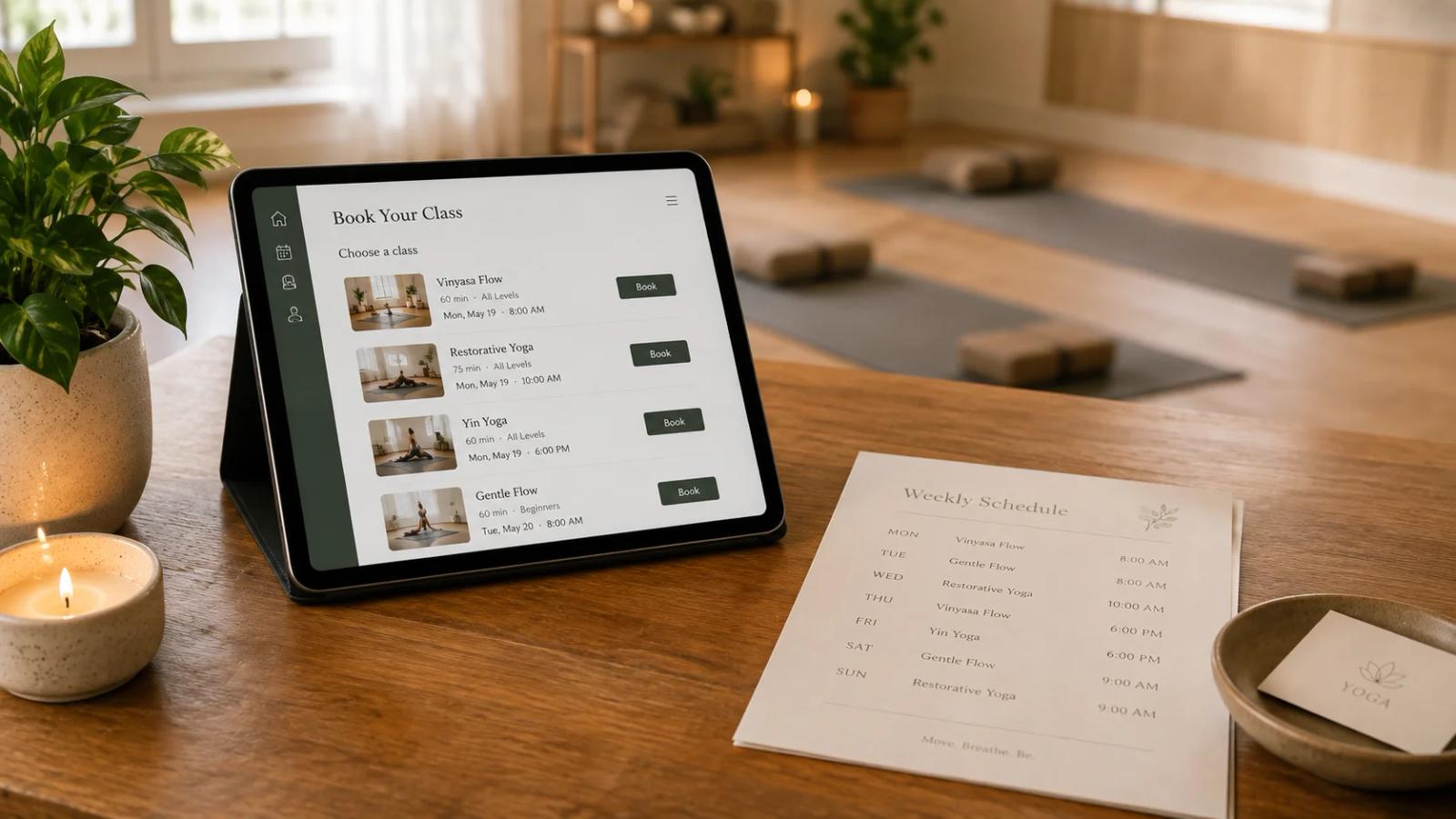
Most yoga studio marketing is built around social media and intro offers, which works well enough until it doesn't. The studios that fill classes consistently are usually doing something different.
They've built a local search presence for the specific styles they teach, a community identity that's stronger than any individual instructor, and simple systems around the referrals and class pack conversions that happen naturally but could happen far more often.
These ten yoga studio marketing strategies are built around how students actually find a studio, choose it, and decide to stay.
At Lunova Growth Marketing Agency, we work with yoga studios alongside other wellness and service businesses. The pattern we see most often is that the studios with the strongest communities are also the ones with the weakest search presence. These strategies are designed to solve both.
The 10 Yoga Studio Marketing Strategies That Fill Classes
These strategies build on each other. Start with search and local visibility, which captures students who are already looking.
Then build the community and retention systems that keep them there once they arrive.
1. Optimize Your Google Business Profile for Class Types, Not Just Location
Most yoga studios have a Google Business Profile set up with a single primary category and little else. That configuration makes you visible for "yoga near me" in a narrow radius, and nearly invisible for anything more specific.
What a properly configured GBP does for yoga studio marketing:
- Secondary categories like "Hot yoga studio," "Pilates studio," and "Meditation center" expand which searches surface your listing.
- Services listed explicitly: vinyasa, yin, prenatal, hot yoga, teacher training. These help Google match your profile to style-specific queries.
- Business attributes like "LGBTQ+ friendly," "women-led," and "accepts new students" filter for exactly the kinds of students most likely to convert.
- Photos of real classes with real students, refreshed quarterly. Studios with 30+ current photos consistently outperform those with a single exterior shot from opening day.
This is often the single fastest-moving piece of yoga studio marketing, and it requires no advertising spend. A fully configured GBP can shift map pack visibility within four to eight weeks.
2. Build Dedicated Pages for Each Class Style You Offer
A single "Classes" page listing everything your studio offers can't rank well for any specific style. Someone searching "prenatal yoga near me" is looking for a specific answer to a specific question. A generic classes page doesn't give it to them.
Each major style you teach deserves its own page. That page should cover:
- What the style involves and who it's best suited for
- What to expect in a typical class at your studio specifically
- Which instructors teach it and a brief note on their approach
- Pricing and how to book: remove every step between intent and action
This yoga studio marketing approach captures style-specific searches that chains rarely compete for. "Yin yoga near me," "trauma-informed yoga," "yoga for seniors." These searches have lower competition and higher intent than "yoga near me," and they're where independent studios have a real structural advantage.
3. Build Teacher Profiles That Do Marketing Work
Teacher bios are one of the most underused tools in yoga studio marketing. A credentials list tells a prospective student almost nothing about whether they'd connect with that instructor's teaching. A real teacher profile does.
An effective teacher profile includes:
- Their teaching philosophy: their style, their pace, what a class with them actually feels like
- What students experience: pacing, tone, focus
- Which students tend to connect most with their style
- A real photo in the studio, not a headshot
A student who reads a teacher profile and thinks "this is exactly what I've been looking for" is significantly more likely to book a class. They're more likely to become a regular, to follow that teacher's schedule, and to bring a friend. Teacher profiles are retention content as much as acquisition content.
4. Make Class Packs the Default, Not the Upgrade
Class packs and memberships are one of the highest-impact mechanics in yoga studio marketing, and most studios present them as an afterthought beneath drop-in pricing.
A student who buys a ten-class pack has made a financial commitment and a psychological one. They show up more consistently, they're more likely to try different instructors, and they're significantly more likely to renew. The class pack is your best retention tool and it happens at the moment of first purchase.
Three things that move more students from drop-in to class pack:
- Lead with the pack, not the drop-in. Present the ten-class or monthly membership as the primary offer and position drop-in as the trial option, not the default.
- Show the math clearly. "Ten classes at $X saves you $Y versus drop-in" is a more effective frame than listing both prices and hoping students calculate.
- Time the offer to the first experience. A student who just finished a great first class is at peak motivation. That's when the class pack offer converts best, not a week later in an email.
5. Ask for Reviews at the Right Moment
Review volume and recency directly affect where your studio appears in local search results. A studio with 40 reviews and a 4.6 rating will frequently lose the map pack position to one with 180 reviews and a 4.4 rating, simply because volume signals active engagement to Google's algorithm.
Most yoga studios have fewer reviews than they deserve because the ask is inconsistent or delayed. The fix is simple:
- Ask immediately after a great class: verbally, with a QR code at the front desk, or a text message within two hours of the session ending.
- Send to Google, not Yelp or MindBody reviews. Google reviews are what move map pack rankings.
- Make it one tap. A direct link to your GBP review form, not instructions to navigate to a review site.
- Assign it. Someone specific on your team owns the review ask every day. If everyone owns it, no one does.
6. Build a Referral System With Real Mechanics
Referred students arrive pre-sold on your studio's specific style and community. They already know what to expect from someone they trust. They convert faster and churn less than students from any other channel.
Most yoga studios rely on organic referrals, meaning a student mentions the studio to a friend when it comes up naturally. A referral system with real mechanics is different:
- Give your best students a specific reason to recruit. A free class credit for each friend who buys a class pack is concrete and easy to explain.
- Give them the tool to share it easily. A referral link or a physical card is more effective than "just tell your friends."
- Acknowledge it when it converts. A personal thank-you from the studio owner when a referral joins is memorable and reinforces the behavior.
- Make the ask at a high-feeling moment. After a special workshop, after someone completes their first teacher training, after a student reaches their hundredth class. Not in a generic email blast.
7. Run a New Student Welcome Sequence
Most first-time students who don't return within two weeks never return at all. The drop-off happens because nothing pulls them back, not because they didn't enjoy the class.
A simple email sequence changes this without requiring manual effort:
- Day 1: Welcome, what to try next, which instructors or class styles to explore based on what they signed up for.
- Day 4: A brief note from the studio or a teacher. Not a promotional email, an actual check-in.
- Day 10: Gentle nudge with a class pack offer if they haven't returned. Frame it as making the next visit easier, not as a sales push.
- Day 21: A milestone acknowledgment if they've returned, or a re-engagement prompt if they haven't.
The sequence doesn't need to be elaborate. It needs to exist and run automatically so that every new student gets followed up with, rather than only the ones whose contact details end up in someone's personal task list.
8. Create Content Around Your Studio's Specific Community
Generic yoga content : "5 benefits of yoga," "how to improve your downward dog."
This content is everywhere and competes with every major yoga media outlet on the internet. It's also not yoga studio marketing; it's content marketing for yoga in general.
Content that actually builds your studio's community is specific:
- Student spotlights that show real people and real practice, with their permission
- Behind-the-scenes from teacher training or workshop preparation
- Class recaps with a photo and a brief reflection from the instructor
- Studio anniversary or milestone posts that acknowledge the community rather than promote a product
This content builds the studio identity that protects attendance when an instructor leaves. A student who identifies with the studio as a community is not going to stop attending because one teacher moves on. A student whose only relationship is with that teacher will.
9. Run Seasonal Paid Campaigns During High-Intent Windows
There are three windows each year when people are most open to starting or restarting a yoga practice: new year, early spring, and September. These are the windows where a paid campaign for new students will consistently outperform the same budget spent in August or November.
What makes these campaigns effective:
- A specific intro offer, not generic messaging. "Two weeks unlimited for $29" is concrete. "Try our studio" is not.
- Local targeting, tight radius around the studio, with awareness of competing studios nearby.
- Landing page match. The ad offer and the landing page offer should be identical. Mismatches between ad copy and page content are the most common reason paid yoga campaigns underperform.
- A follow-up plan for leads who don't immediately convert. Most people who click a yoga studio ad don't book in the first session. An automated follow-up email keeps you present through the decision.
10. Track Attendance, Not Just Followers
The final yoga studio marketing strategy is about measurement. Most studio owners track social media followers, email list size, and website visits. These are inputs, not outcomes.
The numbers that tell you whether yoga studio marketing is actually working:
- Average class attendance by day and time: which slots are filling, which are consistently thin
- Class pack renewal rate: what percentage of class pack buyers return for another
- New student retention at 30 and 90 days: how many first-timers become regulars
- Referral-originated students: tracked separately from general new students
- Average student duration: how long the average student stays with the studio
If these numbers are moving in the right direction, your yoga studio marketing is working. If they're flat despite consistent social media activity, the content is building an audience but not a class schedule. The fix is usually in the search presence, the referral system, or the new student retention, not in posting more often.
Where to Start With Your Yoga Studio Marketing
If you're not sure which of these to prioritize, start with your GBP and your class-style pages. They're the fastest to move and they compound without requiring ongoing manual effort. Once search is pulling in consistent new students, build the referral and retention systems that extend how long those students stay.
The broader wellness marketing context, including the seasonal demand cycles that affect all appointment-based fitness businesses, is covered in our wellness marketing guide. For gym owners dealing with similar attendance dynamics, the gym marketing piece covers the membership-economics side of the same problem.
Reach out to Lunova today and our free Growth Audit will show you exactly which of these ten strategies has the most ground to cover for your studio specifically. The audit is here, it covers all ten areas above, and there's no sales call attached to receiving it.
Frequently Asked Questions
What is the most effective marketing for a yoga studio?
The most effective yoga studio marketing is the combination of local SEO and Google Business Profile optimization (which captures students actively searching for a studio) and a referral system that turns your best students into recruiters. Social media and email are important for retention, but they reach people who already know you exist. Search and referrals reach people who don't yet.
How much should a yoga studio spend on marketing?
How much a yoga studio should spend on marketing depends on its pricing model and average student duration. A studio where students stay for six months or more on a class pack model has a significantly higher customer lifetime value than one where most students buy a single ten-class pack and don't renew.
The longer students stay, the more it's worth spending to acquire a new one. As a rough guide, spending more than a third of average student lifetime value to acquire one new student is a signal that retention needs attention before the acquisition budget grows.
Should yoga studios focus on Instagram or Google?
Yoga studios should use both, but for different purposes. Instagram builds community identity and keeps existing students engaged, which supports retention. Google and local search capture people actively looking for a yoga studio right now, which drives new student acquisition.
The studios that grow consistently treat these as complementary channels. Investing only in Instagram means being invisible to anyone searching actively; investing only in SEO means missing the community-building that keeps students long-term.
How do you fill yoga studio classes consistently?
Filling yoga studio classes consistently requires three things working together: new students arriving through search and referrals, a welcome system that converts first-timers to regulars, and class scheduling that puts strong teachers in high-demand slots.
Studios that fill classes consistently have usually gotten all three right, even if informally. The ones with inconsistent attendance almost always have a gap in one of them.
What makes yoga studio marketing different from other fitness businesses?
Yoga studio marketing differs from gym marketing primarily in the role of teacher relationships and community identity. A gym member's loyalty is usually to the facility and the convenience. A yoga student's loyalty is often to a specific teacher's style and a specific community's feeling.
That means yoga studio marketing has to build both the studio's identity and the teacher's presence, while also protecting against the risk that a student's loyalty is entirely to an individual instructor who could leave.